
How do I care for my home in a Colorado winter?
Do not run the air conditioner in cold weather, pile shoveled snow away from the foundation instead of against it, and seal drafts around windows, doors, the attic and basement. A well-sealed home can be noticeably more energy efficient, and keeping snowmelt away from the foundation protects against moisture and frozen pipes.
Key takeaways
- Never run the AC when it is cold outside. Open a window instead.
- Pile snow toward the yard or street, not against the house.
- Seal drafts with caulk and weatherstripping to cut heating costs.
Here in Colorado, it can feel like we wait months for winter and snow to arrive. The sunny, mild days are a gift, but when the cold finally comes, it is important to know how to care for your home. Christina grew up in Southern California, and luckily Drew was born and raised in Boulder, so he has plenty of practice.
Here are three tips for caring for your home this winter.
1. Why shouldn't I use the air conditioner in winter?
If the house heats up from holiday baking, cooking or a full house of guests, resist the urge to switch on the AC. Running an air conditioner in cold weather can damage the compressor. Open a window or two to let in cool air instead.
2. Where should I put shoveled snow?
Away from the house. Whether you are clearing a walkway, roof or deck, avoid piling snow against the foundation. As it melts, that water can find cracks, lead to moisture intrusion and contribute to frozen pipes. Clear snow toward the street or out into the yard. On Northern Colorado's expansive clay soils, keeping water away from the foundation matters year-round.
3. How do I seal drafts?
The EPA's Energy Star program estimates that sealing and insulating can noticeably cut heating and cooling costs. Most drafts hide in the basement, around windows and in the attic. You can seal many leaks with a simple caulking gun and weatherstripping. Energy Star publishes do-it-yourself guides.
Want a professional look?
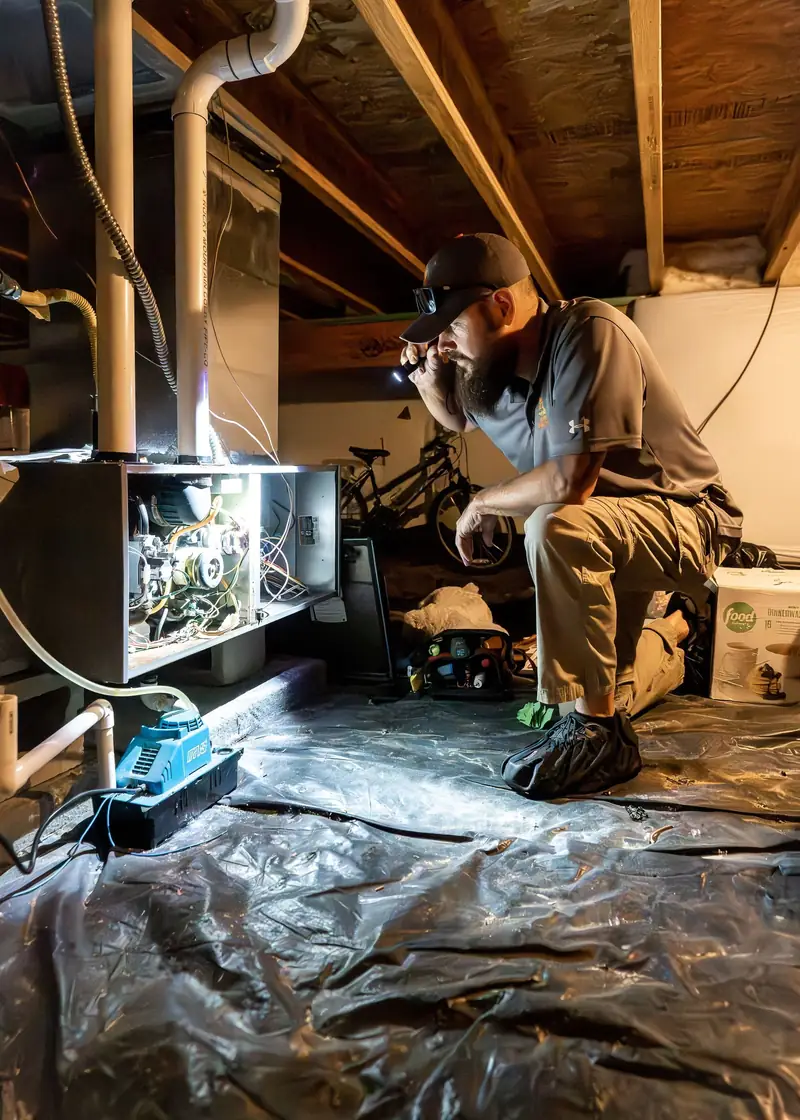
A thermal imaging scan makes drafts and insulation gaps easy to see in winter. And because homes are closed up, winter is the ideal time for a radon test.
From all of us at Kick A-Z Home Inspections, stay warm this season.
Originally published . Updated .
Reviewed by Drew Faulkenburg, InterNACHI Certified Master Inspector. Updated November 10, 2026.